Spam me!

Spongue

Canned Spam with tongue
Copyright 2013 Bryan Hemming

Exactly how unpopular do you have to be not to get spam? Before anyone tries to tell me exactly how unpopular, it’s a rhetorical question. Without wanting to seem overly melodramatic, not getting spam virtually amounts to virtual exile from virtual reality. Doesn’t it? Okay, I’m being overly melodramatic a tad. Nevertheless, a huge chunk of technoworld turning its back on you counts as a cybersnub, at the very least. The knowledge you’ve fallen so far out of the net, you’re not even worth spamming, is one insult too far. How dare they not send me spam? To paraphrase Oscar Wilde: “There is only one thing in life worse than being spammed, and that is not being spammed”. To my mind, it’s nothing less than a denial of your existence in cyberspace.

Nobody messes with me without knowing it, I can tell you. Right at this moment I’m working out how to ruffle a few feathers down at spam HQ. Firing off a salvo of angry emails to the boss, for a start. Let him know who he’s dealing with. Show him how important I am

For instance, the boss probably doesn’t know about all those important spam emails I used to get telling me someone had died in a plane crash in Africa leaving me several million pounds. All I had to do to claim my inheritance was to  transfer thirty-five grand to a bank account in Accra – along with all my bank details. The money was to take care of a few legal matters that needed attending to before the really big money could be released. Big money. Who gets those now? I want answers.

And there’s Zinochka, the beautiful, young, Ukrainian woman from Dniprodzerzhynsk. Named after Felix Dzerzhynsky, founder of the Bolshevik Secret Police, the city is most famous for a tragic tram accident in 1996. Last time I heard from Zinochka she was looking to start a stable relationship with me. I didn’t get straight back to her on that, as I’m trying to work out how to fit it in with my current stable relationship. And how to best present the idea to Anji in a way she’ll understand. If I can figure that out, who knows? Maybe I will need some of that Viagra a pharmaceutical supplier, working out of a bedroom in Winnipeg, has been telling me about, after all. He used to spammail me constantly with offers of all sorts of alternative stimulants and stuff. And I might need a big tub of penis enlargement ointment too. For a friend, of course. How dare they not send me spam anymore! It’s discrimination of some sort. Spamism. People used to spam me from all over the place. There ought to be a law against it.

Seems I’ll have to change my settings to extra spam-friendly to feel wanted again. Viagra salesmen welcome here. You givin’ spam? Bring it on mothersucker! I got plenty of frackin’ room in my mailbox.

Reminds me of another brilliant, new idea I had recently while trying to imagine little elephants out of the stains on the ceiling I was staring at.

Financial embarrassment is not a condition I’m very familiar with. Not because I’ve got so much cash it’s flowing out of my boots, I hasten to add. Au contraire, amigo. Fact is,  I’ve got so used to not having money it’s become the norm. If my face went red every time I was caught without any cash on me, people would think I spent most of the time standing on my head. If you really want to know, I only spend some of the time standing on my head these days. I’ve learned my lesson. Ever since the blood rushing to my head made me so dizzy I fell off the sofa a couple of months ago, I’ve cut down. I still remember Auntie Betty telling my mother it was just a phase I was going through when I was ten-years -old. “They soon grow out of it,” she said. Owing to her uncanny foresight, Auntie Betty had a bit of a reputation as a soothsayer down in the village. Looking back, it’s kind of spooky to think, even though the prediction might’ve been a few decades out, depending on your definition of soon, time eventually proved her partially right.

Now what was I on about? Ah yes, my brilliant, new idea has got to do with travel. I expect you”re dying to know all the details. Okay, I’ll let you in on it, if you all promise to keep it to yourselves. Those who can’t keep a promise are forbidden from reading any further. It all began some years ago.

As some of you might be aware, I had been enjoying a small amount off success as a freelance travel journalist when I first came to live in Spain. Only snag about that was the job didn’t pay enough to allow me to travel. Well, maybe enough to travel, but not to travel and eat. When it comes down to a choice between travel journalism and eating, I come down on the side of eating, every time. But I stray from the main point. In order to show my lust for foreign adventure hasn’t died, I’ve worked out a fantastic way to get my face to every corner of the planet without it costing a penny.

Where I live, Andalusia, is a holiday destination for hundreds of thousands of people from all over the world. Nearly every one of them has some sort of camera in their phone as well as all their other techno thingamagadgets. The essence of my plan is to get in as many photos as possible. Allow me to explain. Lying in wait at street corners I’ll be ready to pop into the frame, as soon as anyone pulls a camera out. My plan is to get in the background, or just to the side. The unknown man, who happened to be sitting on a bench behind them, or paused to admire the view. By the end of this year my face is going to be a firm fixture in millions of homes. If I can’t get to see the world, at least I can get the world  to see me.

Pretty soon, a couple of tourists are going to be showing holiday snaps to one other when they notice they have the same face in the background. My face. I can see it snowballing from there. In no time at all I’ll be recognised on iPhone screens from Beijing to Buenos Aries. More and more people will realise they have my face in their photos, to the point I become internationally famous as ‘The Face’. No photo of Andalusia will be complete without ‘The Face’. I might even start getting spammed again.

Now all I’ve got to do is work how to make money from my brilliant, new idea.

Funny how stains on ceilings can look like elephants. If you look long enough, that is. But some look like fluffy kittens.

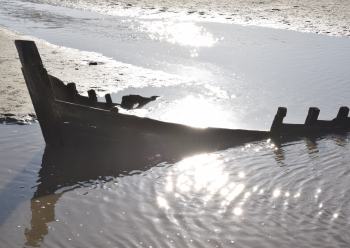
Washed up and smoked out

Horse rider

Even little changes in Santa Catalina don’t go unnoticed. So the recent surfeit of wild euphoria overflowing from the fishermens’ quarter could never have expected to pass without comment. Though the alleyways are renowned for giving off a sense of hopeless optimism, Tuesday’s exceptionally jolly gathering of fishermen in Manolo’s Bar was unusual to say the least. Think what you like, but wall-to-wall grins full of seemingly irrational happiness produce frissons of paranoia in me. I haven’t seen so much yellowing ivory exposed since the circus elephants last came to town.

I have more than an inkling it has something to do with the interception of a Moroccan fishing boat by the Guardia Civil cutter the other night. Supposedly riding out a storm in Spanish waters. Not unusual in these parts, where most clear days the hazy, blue silhouette of North Africa can be discerned hugging the southern horizon.

Before the commander and his men had a chance to board, a suspected illegal catch of fish disappeared over the side. With no hard evidence of serious misdemeanour, three thankful-looking Moroccan fishermen were released without charge after four hours questioning, and a stern warning.

Word has it, some time later, heavy seas yielded up an unexpected harvest on the long stretch of deserted beach between Santa Catalina and Los Pinos. By the time Officer Lopez drove out to investigate it had mysteriously disappeared.

Antolin wore an uncharacteristic wide smile as he recounted the event in Manolo’s. While Pedro collapsed from his stool in a helpless heap of giggles that sent his scruffy dog scurrying out the door. Though vaguely amusing, the news wasn’t exactly hillarious. However, on a recent stroll past the narrow alley, winding from Plaza de Republica, towards Manolo’s, my nostrils caught the illicit aroma of an alternative Maghrebi smoking substance wafting by. It’s an ill wind.

Once, while walking that same stretch of deserted shore, I spotted a giant turtle beached after a particularly violent gale. As I approached the overwhelming stench of putrid flesh confirmed it was dead. Bleached white by sun and salt, the shell stood three feet high and measured more than five feet in length. When I told Juani she immediately saw it hanging beside her paintings in the bar. Despite telling her how morbid I thought the idea, she persuaded Pedro to drive us out there in his old van.

All the way I tried to convince her of the folly of the scheme. Even could we bear to get close, it would take far more than three people to lift it. Juani was not to be put off, even by the stink. With a silk scarf covering her mouth and nose she strode right up and poked a stick at it. The stick went straight through the shell, which had softened to mush in seawater. She made us promise to go back in a few days, assuring us, having dried out by that time, the stench would’ve gone. In her excitement, she said she would bring her boys to lend a hand. I reminded her they were only three and seven years old. Thankfully, on our return, she was right, the smell had gone. So had the giant turtle, both washed away by another storm.

For centuries, Santa Catalinians have reaped the rewards of others’ misfortunes on their beach. The Battle of Trafalgar is still recalled as being particularly bountiful, though nobody in the town can possibly be so old.

Antolin’s grandfather once showed me an ancient naval tunic with tarnished gold braiding and epaulettes. He told me it had been handed down through the generations. Family history has it a distant forebear found it in a sea chest near the remains of a shipwreck washed up on the beach over two hundred years ago. Next to it, a convenient piece of driftwood bore faint letters spelling ‘Victory’. Just in case that didn’t piece the jigsaw together enough for me, Antolin’s grandfather added the coffer had yielded up several more interesting clues, including a black eyepatch, and a brass telescope. Wearing a face as straight as a Roman road, he asked me what they might signify. I knew where things were leading. Before he got round to it, I pointed out Admiral Nelson’s flagship was never sunk, and can be visited in Portsmouth harbour to this day.

Later, Antolin confided his grandfather had bought the tunic in a lot of a dozen at the Sunday morning flea market in Cádiz. They came from the properties department of a film company. So far, he has managed to sell seven of them to unsuspecting English tourists.

What one tide brings in, another can take away, Antolin informed me with a grin.

Not after you’ve smoked it, I said.

© 2013 Bryan Hemming

For another Santa Catalina tale click: Washed Down

This story was originally published  in the June 2009 edition of Angela Clarence’s Anda Luz Creative Journal. Click Washed Down  for another Santa Catalina tale.

The cousin that spoiled teatime

Toaster

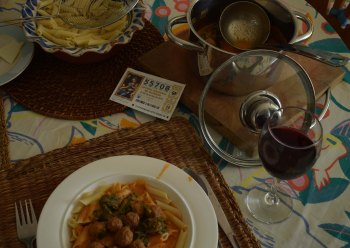
My cousin died on me the other day. Came as a bit of a shock. What a time to choose. It really put me out. Halfway through toasting a couple of slices of bread. Just like that. You’d think he might’ve finished the toast first. I was waiting for those two slices. Even had another small project in mind, involving bacon, lettuce, tomato and mayonnaise for before we all went to bed. I could’ve used him for that. Nope, he just gave up on the job and died. In our kitchen. Next to the sink. Above the washing machine. Couldn’t have happened at a worse, or more inconvenient, moment. I was really hungry. Doesn’t it get you when they go without any warning? It’s so annoying. They do it before you’ve had a chance to eat your tea. It can put you off eating anything at all. Especially if you were really looking forward to a couple of slices of toast with melty butter.

Ah, I think I left out the bit explaining ‘primo’ is Spanish for cousin. I meant to put that in earlier. Oh yeah, and Primo is also the brand name of our new, red and chrome, retro toaster. That’s how it came to be known as my cousin. Our new, red and chrome, retro, broken toaster. The one that died. Built to last forever. The one we bought from Aldi that never lived long enough to celebrate its three month’s birthday. The one with the three year guarantee.  By the look of it you’d think it’d far outlive its guarantee and last a lifetime. We did. That’s why we didn’t keep the guarantee. Nor the receipt. Well, it did last a lifetime; its own. To think, only the other day,  I was saying: “It’ll see me out, that toaster. Mark my words.” The whole episode reminds me of the time I applied for a summer job as a fortune teller on Blackpool Pier. My hopes were dashed once I unwittingly let slip I thought tomorrow was Thursday, on a Friday afternoon. It was back in the days of Tequila Sunrises and Happy Hour. I digress.

Why do I always get the dodgy one? They must see me coming.

Like the laptop we bought from MediaMarkt before Christmas. After only two weeks the screen started telling me the fan wasn’t working, and if I didn’t turn it off immediately it would explode into zillions of tiny, little bits that nobody would ever be able to put together again. And I could kiss cheerio to my unfinished novel too, because it would be taking that to cyber hell with it. Along with my photos, and all my other important documents. I made some of that up. I don’t have any important documents. But I did have to take it back to the shop.

By the time I reached the front of the queue I was boiling for a scrap. Over half an hour of waiting had given me the chance to work out the whole heated discussion from beginning to end, Then translate it into rudimentary Spanish. All in my head. It was sizzling.

I knew the first thing I’d be interrogated about was if I’d followed the instructions. And I had the answer to that. Of course, I’d read a couple, like everybody else. You’d be a fool not to. But nobody reads them right to the end. Do they? I mean it’s not like a law or anything. And then I’d be asked if I’d dropped it, or washed it in the bath along with the dog. Or tried putting a few thousand volts through it to see what happens. I was ready for any question they cared to ask. But one thing I wasn’t ready for was sympathetic understanding.

The polite German assistant, who  spoke perfect Spanish and English, had me floored. So terribly nice was he I became too dumbfounded to do much more than mutter servile appreciation. Even when he told me it might take six weeks, or more, to repair, I smiled happily with humble gratitude, as though it was my fault. When he told me such a fan failure almost never, ever happened, he said it in a way that made me feel so special I could hardly stop myself from bursting into tears and falling down on my knees to kiss his hand in thanks for being so terribly nice and understanding. No problemo, take as long as you like, please. What’s a few weeks? Or months? Between friends. Thankyou, thankyou, thankyou, a million times. Dankeshön and muchas gracias. My grovelling knew no bounds so guilty did I feel at harbouring nasty thoughts about this wonderful example of the human race.

With hardly a week gone by the terribly nice, German man phoned to say it was ready. My guilt intensified. I wasn’t even sure I could face him, knowing what horrible thoughts had passed through my mind while standing in the queue. I even thought about donning a disguise. Then Anji said  he would recognise me from the laptop I was there to collect. I told her I could pretend I was my brother. Contrary as ever, she reminded me I didn’t have a brother. It shouldn’t have been necessary for me to tell her the terribly nice, German man didn’t know that. But it was. In the event I went as myself. Luckily, he wasn’t on duty by the time I got there, and I managed to sneak out shamefacedly without him seeing me. Even worse, the laptop was better than when we bought it. If ever there was a candidate for beatification, the new Pope need look no further. On the other hand, as I know from many of my very own, personal experiences, pride comes before fall. So maybe he should watch out. Not the Pope, the other one.

So let’s hope Aldi will behave the same. I’ll be ready for them if they don’t. I’ve been practising all the nasty things I’m going to say in Spanish. I’m boiling for a scrap. Nobody messes with my teatime toast.

The Baby Rats of Marlene von Schluck

Mirlo

Sketch of an Andalsian pueblo in pencil – Bryan Hemming

Little changes in Santa Catalina. Nevertheless, even little changes mount up over the passing years.

Marlene von Schluck hasn’t always run a gallery in the old part of town. Yet any history of what she did before arriving in the fishermen’s pueblo remains somewhat cloudy. One thing is certain: she doesn’t like to be asked how she got here. That was enough to start me digging. But it wasn’t Marlene who finally spilled the beans.

One tipsy afternoon in Juani’s Bar Antolin got round to saying he’d been sworn not to tell, before telling me just the same. An angry, Swiss punk on the way from Basle to Casablanca to chill, her ageing camper van broke down by the junction that leads into town. She wandered in carrying an empty can, looking for a garage mechanic. Instead, she ran into Pedro. That was ten years ago.

Though her tempestuous relationship with the penniless fisherman only lasted a summer – something else she doesn’t like to be reminded of – Marlene kept postponing the continuation of her journey. As she never got round to fixing the camper van, its rusting hulk has become something of a landmark.

The one time she did attempt to remove it, the council prevented her on the grounds it had been there so long many drivers would miss the turning without it. There followed a heated meeting down at the Town Hall where the leader of the opposition argued removing the rusty, broken-down, old  camper van might bring a lot more well-off visitors to the town. People would be tricked into making a wrong turn because they didn’t recognise the corner without the rust bucket. As well as all the others making the same mistake. The ones always trying to avoid the place at any cost. Whoever they are, they all must have some money, and might pause for a coffee, or a pack of cigarettes, at the very least, thus boosting the local economy.

The council argued the opposite. Wealthy tourists want more than a pack of cigarettes and a cup of coffee. They come in search of a relaxing summer retreat away from the hustle and bustle of the city to spend their wealth. The camper van makes the junction stand out from the others. It’s even how locals give directions. Take the turn by the rusty, broken-down, old camper van, they say.

The oppostion was having none it. Was a rusty, broken-down, old camper van the sort of image the council was trying to project? Did they want vast tribes of marijuana puffing hippies descending on the place? Added to that there are plenty of decent, family holidaymakers looking for somewhere new go. Without the rusty camper van they might not remember  they had ever been here before and stay a few days. At that an uproar broke out, and the mayor hurriedly called the meeting to order before bringing it a close.

Marelene von Schluck tended to agree with the opposition on all points. In the same cruel way a broken thumb reminds you how fantastic unbroken hands are, the rusty, broken-down, old camper van served as a constant reminder of her origins.

More than two summers her Doc Martens stomped the pavements of the pueblo as she sold handmade bangles while spitting hate at middle class tourists. The winters she survived as best she could by cleaning houses for the few townsfolk who took pity on her. As a life of poverty-stricken anarchism became too much, her anger dissipated, and she began to settle down.

Six years ago, to everyone’s immense surprise, she opened a smart art gallery in the ancient Moorish quarter. One rumour has it a wealthy aunt passed away leaving her a small fortune. Another maintains she took the ferry from Algeciras across the straits to Morocco one night, bearing two empty suitcases. Slipping back a couple of days later, the suitcases bulged with contraband. Whatever the truth, now as bourgeois as smoked salmon canapés, the metamorphosis has been little short of miraculous.

The other afternoon, she told me a posse of baby rats has taken up residence in the gallery’s courtyard, over a pot of Darjeeling. Abandoned by their mother, the tiny orphaned bundles of mobile fluff spend their days scurrying about plant pots sniffing out a wonderful new world. So innocent and trusting, it’s possible to creep up without their noticing. Close to, they look such furry, cuddly, little creatures you might scoop one up and nestle it in your palm to stroke its back with a finger.

Hard to imagine they’re in training for lives as vicious urban guerrillas. Whenever they’re not chewing at your spare mattress, or sharpening their incisors on your concrete walls, they’ll like nothing better than crapping in your frying pan and urinating on your breadboard. A pre-emptive strike is called for.

Marlene tells me she has to set poison out before they mature into rat-bearing adults. Old Miguel, from upstairs, has already dispatched one of them. The nonagenarian veteran of Franco’s civil war crushed its tiny skull with a swift blow delivered by the knobbly end of his walking stick. In suitably respectful tones, Marlene assured me the animal didn’t suffer unnecessarily. Wearing the expression of someone recently bereaved, she told me the death was quick and merciful. Like the strike of a cobra, she whispered in awe.

Most evenings, she likes to sit in her jasmine-scented courtyard sipping mint tea; discussing art with wealthy German clients. I can see it wouldn’t be quite the same with hordes of rabid rats swarming about.

In the province of Cádiz, where locals have taken the idea of throwaway culture to extremes, councils have begun to recognise the growing problem of vermin attracted by carelessly discarded refuse. Earlier this year, notices were posted on the large plastic collection bins standing on most street corners. They warn anyone caught depositing rubbish before 9pm will face a heavy fine. The bins are emptied shortly after midnight. As far as I can work out, the theory goes that rats reduced to barely three hours in which to snack will soon die of starvation. Yet, having witnessed the quantity of food the average Santa Catalinian can tuck away between the hours of nine and midnight, I remain unconvinced.

But, as with many other problems in life, the alleys and byways of Santa Catalina have a way of evolving their own answer. Before the rats can get to the rubbish containers they have to run a gauntlet of stray cats attracted by the rats. If it weren’t for them, Antolin tells me, there’d be even more rats. A very Andalucian solution: Instead of rats scavenging in overflowing bins, you get the cats to do it.

As a direct result of her infestation, Marlene has taken to remonstrating it will take more than a few sternly-worded posters to persuade the townsfolk to change the ways of a lifetime. So far, she seems to be right. Santa Catalinians continue to throw out whatever, whenever, wherever they please. As she so acutely observed, nothing short of inducing a mass outbreak of bubonic plague will teach them. The council would do better spending taxpayers’ money advertising for a Pied Piper, she told me. Needless to say, Marlene doesn’t have children. I suggested she should get a cat.

Read another Santa Catalina tale here: Old Miguel and the Circus

Copyright © 2013 Bryan Hemming

A spring day in Cádiz

Cathdral 1Give me any old excuse to visit Cádiz and I’ll race you to the bus stop. Said to be the oldest continuously inhabited city in western Europe at five thousand years, it sure must be one of the most beautiful. All that just an hour’s ride from our adopted home of Conil de la Frontera.

So, when the opportunity cropped up the other day, I was off like a shot. And what was any old excuse, this time? Let me see. Well, spring is one of the best times to visit, as far as the weather’s concerned. Not too cold and not too hot, it’s just right. Goldilocks would have thrived here in spring.

Anji certainly had two and a half very good reasons to go. She had a portrait to deliver to a client, that meant money. And two friends wanted to meet up with her before returning to Barcelona. Oh, and she needed a couple of pencils from the art shop in Plaza de la Mina. That’s only half an excuse because they sell perfectly adequate pencils in Conil. And my final excuse was? Well, someone had to go with her, of course.

Cathedral 3

The client loved the portrait, so we were free to wander wherever the fancy took us. After Anji’s friends queued more than half an hour to buy their railway tickets, that is. Though they got a bit hot under the collar, having lived in this part of the world fo some time now, I’m used to waiting. Andalucia in a nutshell. A ‘if it’s not worth waiting for it’s not worth having’ sort of place. It teaches you how little some things, you used to think you needed, are really worth.

Most tourists don’t stray too far from Plaza de Catredal. But that’s no excuse not to go there. Unless there are cruise liners in town, when it’s all clicking cameras, khaki shorts and wrinkly knees.

Cathedral 2

There are often little concerts outside the cathedral, and sometimes bigger ones. At carnival a stage is erected for the many acts to perform.

Knifegrinder 1

But there’s a whole lot more to the city than churches and a cathedral. The little knifegrinders shop in the photo above, for a start.

I love the old shop signs, which are fast disppearing. The sandwich shop pictured below caught my eye for a second. Must serve some pretty precious sandwiches with all those bars on the window. Funnily enough, I’ve never felt as safe in a city as I do in Cádiz, or felt more at home. The restaurants and bars are good, and mostly cheap. The beaches are golden and the sea is deep blue, where it’s not turquoise.

Man at shop 2

While the others went into the art shop for pencils I slipped into a shady bar advertising beer for one euro a glass. Shady indeed. it was so dark I could hardly see when I stepped in from the street. But my eyes soon adjusted to discover a Moroccan outpost of textiles, cushions and comfy nooks. It was wonderful. In no time at all, the landlady began chatting to me as though we’d known each other for years. Typical Cádiz, or Gaditana, as the women are known. Always welcoming, always friendly. The men are known as Gaditanos, not to be confused with Gitano, which means gypsy.

Plaza 2

Plaza San Antonio may not be the biggest square in Cádiz, but the sparsity of trees makes it feel that way. It’s a bit of a meeting spot for parents. They chat while their toddlers play. Arts and crafts markets are held here at various times of year, as well as other events

Tower 2

Another great thing about Cádiz, while I’m on about great things about Cádiz, is its narrow, shady streets of tall buildings. Great because they break the strong el levante winds, and great because they help keep the city that little bit cooler over the sweltering summers. And great because, well, they’re great, and because they look great.

Bench silhouettes 2

Filled with lots of shady trees and marble benches Plaza de la Mina is home to Cádiz museum. it’s also where the art shop is, and just round the corner from the Moroccan style bar in callé Enrique de las Marinas, or calle del Fideo, depending which street name plaque you prefer to believe, as one is placed above the other.

We meandered along the lanes and alleys this way and that, without any real purpose, other than to drink it all in. You can’t really get lost in old Cádiz. If you walk more or less in a straight line in any direction you will soon come to the sea, as it’s an island.

With the last bus home to Conil leaving at 9pm, it was all to soon to be heading home, but we had to and take our leave of the friends from Barcelona till we meet again in a few months.

Copyright © 2013 Bryan Hemming

I was everything

When I was young,
I was everything,

The breeze, I would close my eyes and be the breeze,
I would be the autumn leaves falling from the trees,
The cold, crisp air of night and early morning,
I would be the sun, the drenching rain,
The sea splashing against the shore,
I was everything.

At times, I would be the rock,
Immovable and strong,
I would be the clouds, everchanging, ever moving,
The endless skies my home,
By night I would be the moon, if not the stars,
I would be the shadows on the wall,
I was everything.

Now, I look from misty panes old eyes become,
I see the child in the breeze,
He is the breeze,
The autumn leaves falling from the trees,
The cold, crisp air of night and early morning,
He is the sun, the drenching rain,
The sea splashing against the shore,
He is everything.

Washed Down

Sammy - Pencil drawing by Bryan Hemming

Little changes in Santa Catalina, but even little changes can have far-reaching implications.

During a particularly dry spell last summer, Antolin advised me not to drink water from my well for the time being. The fisherman often drops off bags of vegetables fresh from his plot by the beach. Over a bottle of fino, he fills me in with local gossip seasoned with a couple of pinches of dry sagacity. Read more